Property Valuation?
Looking to Sell or Let Your Property? Book Your Free Property Valuation with one of our experts.

Property Valuation
"*" indicates required fields

From Wimbledon Chase and New Malden to Putney or Wandsworth, the fiercest boundary disputes can be fought over the smallest piece of land, and they are not uncommon among homeowners. With many houses in Wimbledon being Victorian villas, townhouses with four or five bedrooms, or rows of terraces with gardens and driveways, there is plenty of scope for land boundary disputes with neighbours. Is the fence really worth it though?
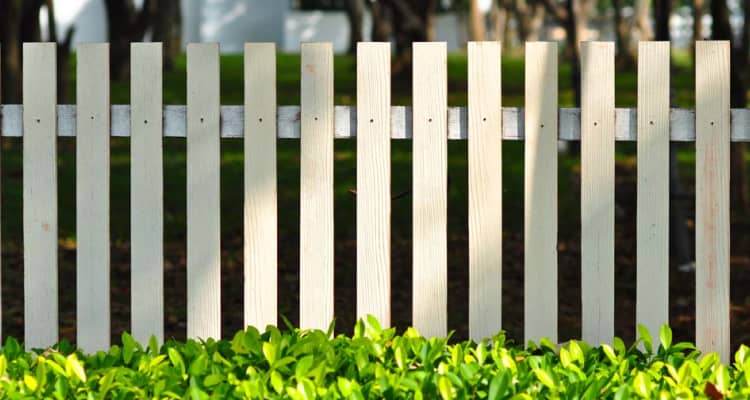
If a boundary dispute is not easily resolved, legal fees can run into the thousands of pounds, even costing far more than the piece of land at the heart of the dispute. Here we answer some of the most frequently asked questions about boundary disputes with a neighbour, and how to deal with them.
A boundary is a line that marks the extent of land ownership by a property owner as decided by the HM Land Registry. In most cases, the boundary line will constitute a hedge, fence or wall.
Different types of boundary disputes occur where the owners of neighbouring properties disagree on where the boundary line lies. Boundary disputes can occur at any time, but tend to arise when a new owner moves into a property and takes issue with the boundary agreement between the neighbour and the former owner.
When you buy a property or acquire it through some other means, such as inheritance, you must register the property with HM Land Registry. The property will then be registered and the ‘general boundaries’ of the plot will be defined by HM Land Registry and included in the final document, otherwise known as the title plan.
However, there is a possibility that the previous owners of the property may have established definitive boundaries to the property, having entered into a ‘boundary agreement’ with the neighbour. You can agree with your neighbours where the exact boundaries are, but make sure to have everything in writing and signed by both parties, in case boundary disputes arise. Then, have the details of this new agreement added to the title plan of your property.
The Party Wall Act permits you to build up to or astride the boundary line with your neighbour, but the correct processes must be followed. If you want to build a party wall near to or on the boundary, you must tell your neighbour in writing. You have no right to build astride the boundary, so if your neighbour objects, you may have to alter your plans.
Whether you are trying to enter into a boundary agreement with a neighbour or trying to determine the exact boundaries, disputes are not uncommon. Here are several tips for handling a dispute and resolving it:

To resolve a boundary dispute, both sides need to be willing to compromise. Talk to your neighbour calmly, maintain friendly relations and avoid a full-scale disagreement. When boundary disputes get personal, they can become more difficult to resolve. Unless the land is worth a lot of money, the legal costs can quickly exceed the value of the land in dispute.
To avoid legal action, you and your neighbour could jointly appoint an independent chartered land surveyor experienced in boundary disputes – and agree to accept their decision. They will survey the land, check deeds and the plans attached to them, and refer to historical documents and aerial photographs. The chartered land surveyor will prepare a new plan marking out your agreed boundary line for submission to the Land Registry as a Boundary Agreement.
If there is a disagreement between neighbours, an objection must be made in writing to HM Land Registry. At this stage, it may be useful to seek legal advice. There will then be an opportunity for all parties involved to enter into a negotiation to reach an agreement. If no agreement can be achieved through negotiation, the case may be referred to a tribunal.
You might have heard of the Boundary Dispute Protocol while navigating a boundary dispute with your neighbour. This is a voluntary, non-binding framework designed to help resolve disputes efficiently and cost-effectively before resorting to expensive litigation. It was developed by property litigation specialists and has the backing of both the Property Litigation Association and the Royal Institution of Chartered Surveyors (RICS) – so this is a good place to start. It’s an especially good option if you and your neighbour have tried to resolve matters informally but communication has broken down.
While it’s got no formal legal status like the official Civil Procedure Rules protocols, judges look favourably upon parties who follow it.
Solving boundary disputes with neighbours can cost a considerable amount on both sides, especially if the dispute goes to a tribunal or court hearing.
Costs can include copies of Land Registry documents (£3-£7 each), surveyor fees (around £1,000), landscaping to resolve the dispute (around £1,000) and legal fees which can run to hundreds, thousands or tens of thousands of pounds. Think carefully before starting legal proceedings and attempt to find an amicable resolution first.
Given that resolving a boundary dispute with a neighbour can be costly and time-consuming, it is wise to try to avoid it occurring in the first place.
Make sure you firmly establish the boundaries before you change anything. Be cautious and always check your plans with your neighbour first, as even work you think won’t cause an issue could be contentious. For instance, replacing a hedge with a fence will set a more specific boundary, and your neighbour may disagree with where you chose to put it.
If talking doesn’t work, you may avoid litigation through mediation or Alternative Dispute Resolution (ADR) and your lawyer and the judge usually expect you to try it. ADR requires flexibility and isn’t always legally binding, but can be faster, cheaper and salvage relationships.
How do you deal with a neighbour dispute over boundaries if the wall or fence is on the boundary? First, find out if it’s on your property, your neighbour’s property, or if it is shared. Check the legal documents you received when you purchased your home. If you don’t have these, you can buy them from the Land Registry. It’s also possible to purchase the documents for your neighbour’s home, which may provide information that is not within yours.
Talk to your neighbour in person to seek permission before conducting works, and follow up with an email on your agreement. If you don’t wish to talk face to face, then write a formal letter or appoint a surveyor. Ensure you keep copies of all correspondences.
Try to find a compromise. It’s a good idea to keep on good terms with your neighbour, as it will be cheaper than seeking assistance from a solicitor to settle the dispute. If there are issues with your neighbour about the boundary line, contact RICS, a professional body who work with surveyors specialising in property issues.
Do you know the location of your driveway boundary line? To avoid driveway disputes with your neighbour, try to resolve the issue by talking it through. The specific details can be found in your property title deeds. Write a letter to your neighbour and include any title deed covenants.

If you still can’t agree over the boundary dispute with your neighbours over their driveway, you may need to enlist the services of a surveyor and solicitor. A surveyor can submit a plan of the driveway to the Land Registry and provide legal advice. They will initially attempt to settle the disagreement and find an alternative dispute resolution; otherwise, it may end up in a court battle.
These are some of the questions homeowners ask about boundary disputes with neighbours:
Easements give the right to use another person’s land for a specific, predefined purpose, e.g. to reach their own land.
When a building, fence, wall or greenery extends over the boundary onto a neighbour’s property, this is called encroachment.
Using adverse possession claims, one party can claim ownership of land they have been using openly and unchallenged for a continuous period (usually 10 years), but only under certain criteria. Adverse possession claims, as with similar disputes, can be challenging to resolve in court.
Surveyors help resolve boundary disputes by using historical records, present day surveys and legal documents to define the property’s boundary accurately.
Ongoing boundary disputes can worry buyers and lenders, potentially impacting your property price. If you fail to declare any property disputes, the buyers may also demand compensation later.
As far as your rights are concerned, you can trim branches or roots that cross into your property from a neighbour’s hedge or tree, but only up to the boundary line. Never cut beyond the boundary or apply weedkiller to your neighbour’s plants, as this might even constitute criminal damage.
If your neighbour’s evergreen or semi-evergreen hedge is over 2 metres tall and blocks light or access to your property, you can complain to your local council under the Anti-social Behaviour Act 2003. However, you must first try to resolve the issue informally with your neighbour before the council will intervene.
In an area with long-standing or historic properties, it is worth checking if the tree or hedge has a Tree Preservation Order or is in a conservation area. If so, trimming and pruning might require local council permission.
You are legally required to disclose any boundary dispute on the Property Information Form (TA6) when selling. Failing to disclose can result in the buyer suing you for misrepresentation, even after the sale completes.
It’s best to resolve the dispute before selling, either informally with your neighbour or through mediation, because this maintains property value and speeds up the sale. Even resolved disputes must be disclosed, but they present far less concern to buyers if you can provide evidence of the settlement agreement.
There are all sorts of boundary disputes including fence ownership, encroachment and overhanging vegetation – so it can be confusing to navigate without the right help. If you’re looking to sell or buy a property in the Wimbledon area or you need guidance on property boundaries in Putney, Battersea, Clapham, South Wimbledon or Merton Park, contact us at Robert Holmes & Co today.
Looking to Sell or Let Your Property? Book Your Free Property Valuation with one of our experts.
"*" indicates required fields
Book a quick phone consultation with one of our negotiators.
"*" indicates required fields


