Property Valuation?
Looking to Sell or Let Your Property? Book Your Free Property Valuation with one of our experts.

Property Valuation
"*" indicates required fields

The best time to sell your house is when lots of buyers are looking for a new home, and relatively few competing sellers. If you have the luxury of choosing when to sell, there are many factors you should consider when deciding on the best time to list your property.

A quick search on property portals such as Zoopla will show how many similar properties are up for sale in your local area. Properties in sought-after areas like Wimbledon Village and Coombe generally don’t come onto the market as often as properties in other areas of the UK. Homes in Mayfair are amongst the most sought-after not only in the UK but across the world.
This means there will usually be demand regardless of the time of year or current UK property market conditions. However, understanding the best time to sell ensures that you achieve a reasonable price for your property in Wimbledon.
Even when your property is in an area that is well-sought after, there will still be times that are better to sell, and you will be able to achieve a higher asking price. Average house prices fell by around 3% in Wimbledon over the last 12 months, and a similar decrease was recorded for properties in Putney. Therefore, keeping a close eye on whether house prices start to increase again is a good idea.
Buyer demand levels have a cyclical pattern and fluctuate throughout the year, so understanding more about what impacts the demand levels will help you decide the best time to sell your home.
Historically, the spring and summer seasons have been considered better times of the year to sell, except for the school holidays.
The time of year can significantly impact whether your house will sell fast. There are typical peaks and troughs throughout the year. Awareness of these can help you achieve the best price for your property in the shortest possible time.
Spring is traditionally considered the best time to sell a property because people aren’t on holiday or busy with Christmas celebrations, so they have time to think about house hunting. Families with school-aged children may start their property search in spring, aiming to tie their move in with the school summer holidays. This means that March, May and June tend to be the best months to sell (avoiding the Easter holidays).
Another advantage of selling in spring is that your garden will look more attractive as it comes into bloom. Sunny weather and lighter evenings will help show your property at its best.
If you are looking to sell a family home, anytime around the summer holidays should be ideally avoided. Parents will be focusing on childcare arrangements and family holidays and typically won’t want to spend their summer going through the moving process.
If properties are selling quickly in your area, late June and July might still see plenty of interests but you’ll probably not get as many viewings for a family home in August compared to other times of the year.

The autumn months of October and November can be an excellent time to sell your home. Prospective buyers are back from their holidays, and your home and garden are still looking attractive before the colder weather sets in.
The people who want to move into a new house before Christmas will be motivated to put an offer in during early autumn, but historical data shows that November is the worst month to put a property on the market.
The market tends to slow down dramatically from late October, but selling during the lower peak times can sometimes work in a seller’s favour. There are fewer properties to compete with and many other properties on the market have been available for a while without attracting a buyer, known as ‘stale’ properties.
Another advantage of selling a house outside peak months is that mortgage lenders and solicitors are usually less busy, so everything should move faster.
Once Christmas holidays are out of the way, there will be an influx of buyers looking for a fresh start in the new year and the housing market picks up pace around mid-January onwards.
The run-up to Christmas is a quiet time in the property market as people are focused on Christmas plans rather than house hunting. In our experience, the market typically hibernates during the final two or three weeks of the year, so December is one of the worst times of year to sell a house.
Things pick up in the New Year as many people see this as a time for a fresh start. Online portals often report large numbers of visitors immediately after Christmas. However, these buyers are often at the beginning of their search, and it may be several months before they are ready to commit to a purchase.
The end of July and August are considered two of the worst months to sell, as many potential buyers are away on holiday. This is particularly true if you are selling to families, since their holidays are limited to the school calendar, and parents are generally busy keeping the kids entertained during the school break.
If your main priority is to maximise the sale price, as opposed to a quick sale, the best time to put your home on the market is when there is high demand and a shortage of available properties. Typically, this tends to be around March, April and May as there are more buyers at this time of year, but it can depend on the area.
In sought-after areas where properties don’t come onto the market very often, the time of year might not make much difference, and you will be able to achieve the best price in any month.
Other factors can impact when it is a good time to sell to achieve a higher price. For example, recent changes to stamp duty thresholds saw an increase in house prices as buyers looked to buy a property before the stamp duty thresholds decreased.
There is no single ‘right’ time of the year to sell your property in Wimbledon because there are many factors to consider. Since the advent of online marketing and a more globalised economy, traditional times to buy property are no longer clearly defined.
Research any major works planned in your local area. Long-term construction projects happening nearby can put people off – particularly if they impact road traffic, transport routes, or noise levels. On the other hand, plans for new rail links, such as Crossrail, can bring buyers to the area and boost property prices.
It is worth looking at other comparable properties for sale in your area to ensure your price is competitive within the local market. This can minimise the risk of your house being up for sale for a long time. You can check on online portals to get an estimated sale value for your property in Wimbledon.
The demographics of residents in the specific area you are selling should also be a consideration. For Wimbledon Park, the last UK census revealed the age breakdown of the population to be: 0-16 25%, 17-30 14%, 31-45 18%, 46-60 25%, 61-75 13% and 75-90 4%.
The high percentages of children, and adults aged 46-60, indicate that the area is very popular with families, so you should try to avoid selling a house around school holidays.
You are more likely to sell your home quickly and for the best possible price if there are lots of buyers looking for a property like yours. Different property types and sizes attract distinct groups of people, so you must consider what time of year your target buyers will be most prevalent.
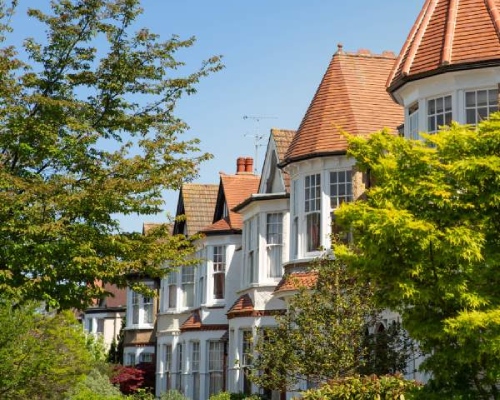
Larger homes attract families with children. If you can, avoid putting your home on the market during school holidays when parents are likely to be busy with childcare. In Wimbledon, many Edwardian terraces and townhouses with four to five bedrooms make it a popular area for larger families.
If you sell a one or two-bedroom property, your target buyers will likely be young singles or couples. A good time to target these buyers is in January and February to capitalise on New Year’s resolutions and in late summer when potential buyers will be keen to get into their new home before Christmas.
Older buyers who are perhaps downsizing are most prevalent during the summer months.
Current economic conditions significantly impact the property market, and the cost-of-living crisis and high-interest rates over the last few years meant that buyers were being more cautious.
Interest rates peaked in 2023, when the Bank of England rate hit 5.25%, the highest rate since the 2008 financial crisis. From mid-2024 and throughout 2025, interest rates have been gradually decreasing, and in August 2025, the rate fell to 4%. While this rate is still considerably higher than the pre-pandemic rates of below 1%, the declining interest rates are helping with mortgage affordability.
Many first time buyers have been waiting for interest rates to come down before they can get onto the property ladder and the interest rate decreases have helped to attract more first time buyers into entering the market.
Suppose any construction work is happening or planned in the near future. In that case, delaying putting your property on the market is best. Noisy construction work, scaffolding on nearby buildings or road congestion due to roadworks can put buyers off.
However, regeneration projects in your area could increase the demand for your property and how much your house is worth. In south west London, the Nine Elms regeneration scheme includes improved transport infrastructure and new amenities. This contributed to a significant rise in house prices in areas such as Wandsworth and Battersea in 2022.
The Old Oak Common railway station construction brings a transport super-hub to west London, which is also expected to increase house prices in the area.
If you are not ready, don’t list your property – even if the market seems to be thriving.
Rushing to put your house on the market without preparing could mean your home looks less attractive than other properties that are similar to yours. Take some time to make your property look its absolute best.

If you get a buyer, you must be ready to move quickly. Your buyer may pull out if you cause delays to the exchange and completion process.
Homes that stay on the market for too long lose their ‘fresh appeal’, and buyers can be put off because they perceive that your home hasn’t sold because there is something wrong with it.
For many people, personal circumstances mean they cannot wait and are forced to sell during a so-called ‘quiet’ period. If this is your situation, then don’t panic. Buyers are looking for property in Wimbledon Village 365 days a year. We suggest that you:
When deciding whether now is a good time to sell, these are some of the questions you should consider before selling a house:
While it can take a while to sell a property, this is not always the case, and you may need to move out within a matter of weeks if your sale goes through quickly.
You will also need to have all the finances in place for selling a property, such as conveyancing fees, removal costs and any associated costs if you are also buying at the same time.
The government’s spring and autumn budgets often include tax changes and spending cuts that can impact buyer confidence. Changes to stamp duty recently caused volatility in the housing market, so it is a good idea to keep an eye on the news surrounding budget announcements to assess whether buyer confidence could be affected by predicted changes.
Consider how much flexibility you have or whether you are working to a deadline. For example, you might need to move house for a new job or to apply for schools by a deadline.
There could be several reasons that your property is remaining on the market for longer than you expected;
If you want to sell your property in Wimbledon Village or the surrounding areas of Coombe Hill, Kingston Hill, Putney and Southfields, contact Robert Holmes & Co today for an up-to-date assessment of its market value. You could be surprised how much it is worth.
Looking to Sell or Let Your Property? Book Your Free Property Valuation with one of our experts.
"*" indicates required fields
Book a quick phone consultation with one of our negotiators.
"*" indicates required fields