Property Valuation?
Looking to Sell or Let Your Property? Book Your Free Property Valuation with one of our experts.

Property Valuation
"*" indicates required fields

Choosing which street to buy a property on in Kingston upon Thames is an important decision as prices on specific streets can vary significantly – and your street location also impacts school catchment criteria, plus proximity to transport links and amenities.
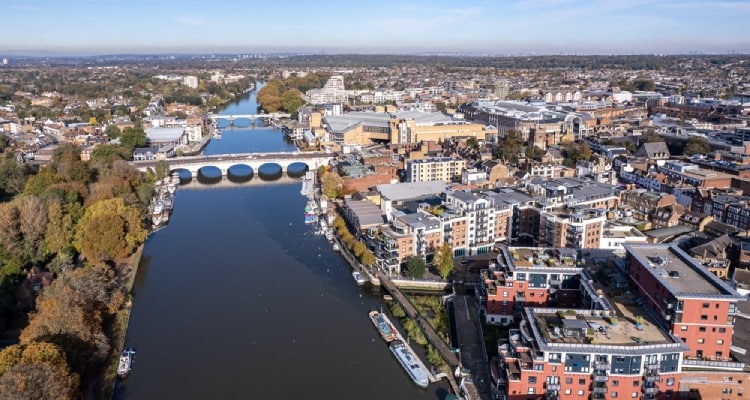
The town itself anchors the KT1 and KT2 postcodes, but the borough extends into KT3 (New Malden) and the Coombe and Kingston Hill areas carry their own distinct character within KT2.
The area divides into four recognisable pockets: the town centre and riverside (KT1), the residential streets climbing toward Kingston Hill and Coombe (upper KT2), the quieter family streets of the Villagers and Canbury areas (lower KT2 and northern KT1), and the more affordable fringe streets bordering Surbiton and New Malden. Each has a different buyer profile, a different price ceiling, and a different reason for choosing it.
Kingston’s popular and most notable addresses sit in the upper reaches of KT2, where the roads climbing toward Coombe and Kingston Hill carry both the largest properties and usually the strongest price premiums.
For buyers focused specifically on flats, Riverside streets around the Thames, particularly the roads between Kingston Bridge and Canbury Gardens, including Canbury Park Road and sections of Lower Ham Road, offer a different type of premium. New-build and converted riverside apartments here carry a location premium that reflects both the views and the leisure amenity of the riverbank.
| Street / Road | Property Type | Primary Price Driver |
|---|---|---|
| Kingston Hill | Large detached houses | Richmond Park access, plot size, prestige |
| Coombe Lane West/Coombe Road | Detached houses, estate setting | Privacy, plot size, mature landscaping |
| Richmond Road (north KT2) | Period semis, converted flats | Transport links, Canbury Gardens proximity |
| Canbury Park Road/Lower Ham Road | Riverside flats, conversions | Thames frontage, leisure amenity |
Kingston upon Thames is not a single neighbourhood. Its residential streets divide into genuinely distinct pockets with different characters, price points, and practical advantages.
| Zone | Character | Who It Suits |
|---|---|---|
| Kingston Hill / Coombe (upper KT2) | Large detached houses, green, private | Families, upsizers, equity-rich buyers |
| Canbury & north KT1 | Victorian terraces, riverside access | Young families, professionals |
| Town centre & riverside (KT1) | Flats, new-build, converted | Investors, young professionals, downsizers |
| Villagers / Cambridge Road area | Period semis, family streets | Growing families, school-focused buyers |
| Kingston Vale / Robin Hood area | Mixed housing, park-adjacent | Buyers priced off Kingston Hill |
Conservation areas shape the character of specific streets. The Kingston upon Thames Old Town Conservation Area covers the historic market town core, protecting the street pattern and building line around the Market Place and the streets immediately to the south and east.
The Royal Borough of Kingston upon Thames planning portal lists the full boundaries and buyers purchasing within a conservation area should factor in the restrictions on external alterations, extensions, and permitted development. The Canbury Gardens area and sections of Richmond Road also fall within designated conservation zones, which helps preserve the architectural integrity of those streets.
School catchment hotspots are a significant driver of demand on specific streets. Tiffin School and Tiffin Girls’ School, both selective grammar schools, are located in Kingston and draw applications from across the borough and beyond. Because they are selective, proximity matters less than for catchment-based primaries but the streets closest to the schools (particularly around Queen Elizabeth Road and the roads between Kingston Bridge and the schools) are popular with families who value the walk-to-school option.
For non-selective primaries, the catchment boundaries for schools such as St Luke’s CofE Primary and Latchmere Primary shift year to year; buyers should check the school admissions pages for the most current data before relying on any specific street falling within a given catchment.
Transport proximity varies greatly from one area to another. Kingston station (South Western Railway, direct to London Waterloo in around 30 minutes) is the primary draw, and the streets within a ten-minute walk of the station, particularly those to the north and east of the town centre, carry a measurable premium over otherwise comparable roads further out. Kingston Vale and the roads immediately below Richmond Park are better served by bus than rail, which tends to moderate prices compared to the streets close to the station.

Price variation in Kingston upon Thames is driven by a combination of postcode, distance from the station, school catchments, conservation area designation, and property type. The gap between the top and bottom of the market within a single postcode can be substantial.
Within KT2, the spread is particularly wide. The upper reaches around Kingston Hill and Coombe sit at a different price level from the streets around Kingston town centre in the same postcode. Property sales data shows detached house sales in KT2 ranging from under £700,000 for smaller, modernised houses in less prominent roads to well over £3m for the larger Coombe estate properties. Semi-detached houses in KT2 have typically transacted in the £700,000 to £1.3m range, with the top end reserved for the wider-fronted, better-preserved Victorian stock on roads like Queen’s Road.
KT1 is more compressed in its price range, reflecting a higher proportion of flats and a greater density of converted and purpose-built stock. Flat sales in KT1 have broadly ranged from around £300,000 for smaller one-bedroom units to £600,000 or above for larger or riverside apartments, with new-build premiums applying to the most recently completed riverside schemes.
Not every high-value street is well known in Kingston. So take a look at these options below for streets which may not make the fron page, but which offer buyers and tenants substantial value.
Tenure in Kingston upon Thames divides broadly along the lines you’d expect. The town centre and riverside areas of KT1 have the highest concentration of privately rented properties, while the family streets of upper KT2 and the Coombe estate are overwhelmingly owner-occupied. Below are typical trends of tenure – though these do change over time:
The most significant development activity affecting specific streets in Kingston upon Thames is concentrated in the town centre and along the riverside corridor.
The long-discussed question of transport investment in Kingston, including periodic proposals around improving bus connectivity and cycling infrastructure, has not yet produced changes that would fundamentally alter the transport premium enjoyed by the station-proximate streets. That said, public realm improvements around the town centre and riverside have been ongoing, and the cumulative effect on the appeal of the central KT1 streets has been positive.
Having identified the right pocket of Kingston upon Thames, whether that’s a family house in the Canbury streets, a riverside flat in KT1, or a larger property on Kingston Hill, the next step is to understand what’s actually available and moving in that part of the market. Contact us to speak with someone who knows these streets in detail, or register for off-market properties to access stock that doesn’t reach the open market.
For prestige and space, Kingston Hill and the Coombe estate roads are the standout addresses in KT2. For Victorian period character within easy reach of the station, Queen’s Road and the Canbury streets are consistently popular with families and professionals. Riverside flats are most concentrated along Lower Ham Road and Canbury Park Road in KT1.
Tiffin School and Tiffin Girls’ School are selective grammars, so catchment proximity doesn’t affect admissions. For non-selective primaries, catchment boundaries shift annually and must be verified with the Royal Borough of Kingston upon Thames admissions service. Streets in the Cambridge Road and Canbury areas have historically been well-placed for popular local primaries.
The main price drivers are proximity to Richmond Park, walking distance to Kingston station, conservation area designation, school catchment position, and property type and condition. Two streets a short walk apart can differ by hundreds of thousands of pounds depending on which side of a conservation area or catchment boundary they fall.
Kingston Vale has been attracting buyers priced off Kingston Hill who still want genuine Richmond Park access at a lower price point. The Canbury streets north of the town centre have also moved from relatively overlooked to actively sought-after, offering period stock and riverside proximity at prices below the Coombe estate.
The KT1 town centre and riverside streets offer the most consistent rental demand from young professionals, with short voids and a stable tenant profile. Yields are moderate given strong capital values. The family streets of KT2 can deliver longer tenancies for landlords letting whole houses, while the upper KT2 and Coombe estate streets are better suited to owner-occupation than standard buy-to-let.
Looking to Sell or Let Your Property? Book Your Free Property Valuation with one of our experts.
"*" indicates required fields
Book a quick phone consultation with one of our negotiators.
"*" indicates required fields


