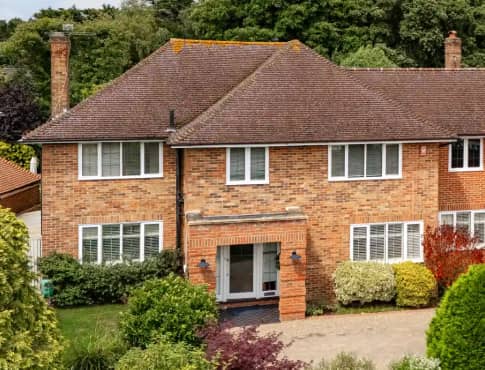
Property Valuation?
Looking to Sell or Let Your Property? Book Your Free Property Valuation with one of our experts.

Property Valuation
"*" indicates required fields

Many buyers looking at New Malden are surprised to find much more than a quiet suburban commuter town. New Malden offers a varied range of property types, including well-preserved Victorian and Edwardian properties on wide streets with large gardens. When compared to properties closer to central London, buyers will pay less here for more space, while still benefitting from an easy commute into the city.
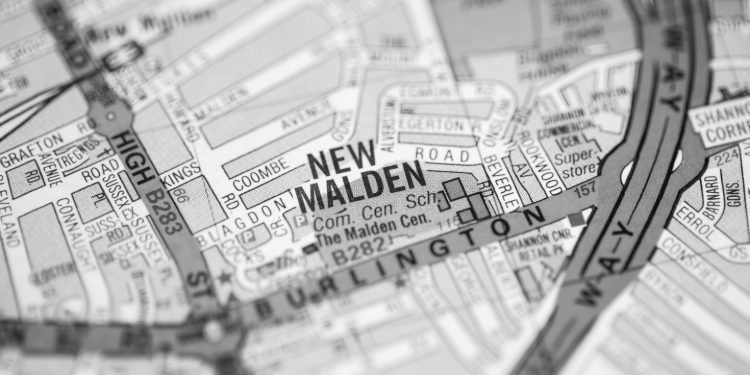
New Malden’s property character is shaped by two overlapping factors: its development timeline and its geography. The railway arrived in 1869, triggering a wave of suburban housebuilding that ran from the 1880s through to the 1930s, and the result is a borough where Victorian terraces and Edwardian semis form the backbone of the market. The area sits across two local authority boundaries, with the larger portion in the Royal Borough of Kingston upon Thames and a smaller section falling within the London Borough of Merton.
What makes New Malden genuinely different from its neighbours is the combination of relative affordability and scale. The most recent published figures, from Zoopla’s latest data, put the overall average sold price at £684,531, which sits below both Raynes Park and comparable parts of Wimbledon. For buyers who want a proper family house rather than a flat or a heavily extended terrace, New Malden offers more options at lower entry points than almost anywhere else in this part of south-west London.
New Malden’s market is dominated by period terraced and semi-detached houses, with flats concentrated around the high street and in purpose-built blocks. The table below gives a reference for what buyers will find in terms of property types and prices in New Malden.
| Property Type | Typical Period | Typical Tenure | Approximate Price Range |
|---|---|---|---|
| Victorian terraced house | 1880s–1900s | Freehold | £550,000–£750,000 |
| Edwardian semi-detached | 1900s–1915 | Freehold | £700,000–£950,000 |
| Inter-war semi-detached | 1920s–1930s | Freehold | £650,000–£850,000 |
| Purpose-built flat | 1960s–1980s | Leasehold | £300,000–£420,000 |
| Converted flat | 1880s–1915 | Leasehold | £330,000–£450,000 |
| New build apartment | 2024–2027 (ongoing) | Leasehold | Varies |
Price ranges are indicative, based on Zoopla sold price data. Individual properties will vary by condition, size, and location within the area.
New Malden does not have the density of conservation designations found in parts of Wimbledon or Kingston town centre, but there are designated areas that buyers in certain streets should be aware of.
The Old Malden Conservation Area, designated by the Royal Borough of Kingston upon Thames, covers the historic village core around St John the Baptist Church and the surrounding lanes. This predates the Victorian suburb by centuries, and the conservation designation reflects that. Within the area, permitted development rights are restricted: alterations to external appearance, including window replacements, cladding, and roof changes, require prior consent. The character the designation protects is one of modest historic buildings, a working church, and a green setting that sits in marked contrast to the suburban streets surrounding it.
Buyers considering properties within or immediately adjacent to any conservation area should check the specific boundary with the Royal Borough of Kingston upon Thames planning portal before making an offer, as the precise line is not always obvious on the ground. The council’s conservation area appraisals set out the heritage rationale and the materials requirements in detail.
There are listed buildings within the Old Malden area, including the Church of St John the Baptist, which is Grade II* listed. Buyers purchasing within close proximity of a listed building should take specialist advice, as listed building consent requirements extend beyond the structure itself to certain works within the boundary.
For the Victorian and Edwardian streets that make up the majority of New Malden’s housing stock, there are no blanket conservation designations. Permitted development rights apply in the normal way, subject to any Article 4 directions that may be in place. Buyers should confirm the position with the relevant local authority before assuming what works are permissible.
The Victorian terraces in New Malden are broadly representative of the period, but the ones on streets such as those in the grid south of the high street have retained more original fabric than is typical in comparable areas. The main modification pattern to watch is uPVC window replacement and the removal of internal partition walls to create open-plan ground floors, which can affect structural integrity if done without adequate support.
The Edwardian semis in New Malden tend to be in better structural condition than their Victorian terrace counterparts, partly because their larger footprints have attracted more thorough renovation over the decades. The side return extension is almost universal among owner-occupied examples, and buyers should check whether any extension has been built with proper consent.
Inter-war stock in New Malden is generally solid and structurally uncomplicated. The main consideration is that original steel window frames, where not replaced, can be prone to corrosion and are expensive to repair or source like-for-like.
The most significant development activity in New Malden is centred on the Cocks Crescent regeneration scheme, a large-scale project being delivered in partnership with the Royal Borough of Kingston upon Thames. The scheme involves a new residential development of apartments arranged across seven blocks, ranging from seven to fourteen storeys in height. The first homes were delivered in winter 2025, with the full site expected to complete in 2027.
Each home in the scheme is predicted to achieve an EPC rating of B or above. The development includes 240 electric vehicle charging points, over 900 cycle storage spaces, and solar panels across the site. For buyers considering a new build purchase here, the energy performance credentials are a genuine selling point relative to the area’s period stock, most of which sits at EPC D or below without significant retrofit investment.
The wider Cocks Crescent project also includes a new leisure and wellbeing hub with a 25-metre swimming pool, improved public open space, and a new public square. A separate Jubilee Square and the regeneration of the Fountain Roundabout are also planned as part of the town centre improvement programme being taken forward by the Royal Borough.
For landlords assessing New Malden as a buy-to-let location, the new build stock at Cocks Crescent offers a different risk profile to the period houses that dominate the area: lower maintenance liability, strong EPC ratings that will be increasingly important under likely future regulation, and a tenant base drawn to new-build specification. The trade-off is a higher entry price per square foot than the existing flat stock, and leasehold tenure with service charges to check over before purchase.
Beyond Cocks Crescent, there are no other major new build schemes currently under construction or with planning approval in New Malden at this time.
Outside space in New Malden is considerably more generous than the London average, which is one of the area’s consistent draws for buyers relocating from inner London boroughs.
Off-street parking is available with many of the semi-detached houses and is a notable advantage over the terrace stock, where on-street parking is the norm. The area is within a controlled parking zone in parts, so buyers should check the applicable zone and permit arrangements with the council before purchase.
The majority of New Malden’s housing stock consists of Victorian terraced houses and Edwardian semi-detached houses, built during the suburban expansion that followed the railway’s arrival in 1869. Inter-war semis from the 1920s and 1930s are common towards Motspur Park and Old Malden. Purpose-built flats from the 1960s to 1980s make up much of the flat stock, and new build apartments are being delivered as part of the Cocks Crescent regeneration scheme, with the first homes completed in winter 2025.
Yes. The Old Malden Conservation Area covers the historic village core around St John the Baptist Church and the surrounding lanes, and is designated by the Royal Borough of Kingston upon Thames. Within this area, external alterations require planning consent, and permitted development rights are restricted. The Church of St John the Baptist is Grade II* listed. The Victorian and Edwardian streets that make up most of New Malden’s housing stock are not within a conservation area, though buyers should confirm this for their specific address with the local planning authority.
Houses in New Malden are almost universally freehold. Flats, whether purpose-built or converted, are leasehold, as are the new build apartments being delivered at Cocks Crescent. Buyers of leasehold properties should check the remaining lease length, ground rent terms, and service charge history carefully before proceeding, and should take advice on any lease with fewer than 80 years remaining.
Based on the most recent published sold price figures from Zoopla, New Malden’s overall average sits at approximately £684,531, which is lower than Raynes Park (£817,190.) and broadly comparable parts of Wimbledon, but higher than Worcester Park (£575,056) and Surbiton (£612,083). For buyers seeking a family house with a garden at a lower entry point than the immediate Wimbledon market, New Malden offers genuine value relative to its neighbours.
Robert Holmes has detailed knowledge of New Malden’s period streets and the specific trade-offs buyers face across different parts of the area. If you’re weighing up a Victorian terrace against an Edwardian semi, or looking at the new build stock at Cocks Crescent, contact us to talk through what’s available, or register as a buyer to be matched with properties before they reach the open market.
Looking to Sell or Let Your Property? Book Your Free Property Valuation with one of our experts.
"*" indicates required fields
Book a quick phone consultation with one of our negotiators.
"*" indicates required fields