Find your perfect home.
Let us know what you are looking for in your new home and we will tailor our search to your requirements.

A property viewing allows the tenant to see the property first-hand. It is also an excellent opportunity to ask any questions about the property.

As a prospective tenant, it is essential to arm yourself with as much knowledge as possible about the property before you sign the tenancy agreement to avoid the potential for surprises later down the line.
If you are looking for rental properties in Wimbledon, the options range from one-bedroom flats starting at around £1,100 pcm to sprawling 5-bedroom properties priced at over £6,000 pcm. Currently, there are plenty of properties on the rental market to suit different space requirements and budgets.
Wimbledon Village and surrounding areas such as Wimbledon Park are highly desirable areas to live in, but it is still important to ask the right questions to find the perfect home.
We advise making a list of questions and taking it along to all your viewings, as it’s easy to forget more general questions once you’ve stepped into the property.
Here are 13 questions to ask:
If you are viewing a house or flat with a private garden or outside space, find out who is responsible for maintaining it and whether the tools you need are provided. Buying a lawnmower, hose pipe, and other gardening tools will cost you additional money.
Flats will likely have communal areas such as hallways, courtyards and gardens. Check who is responsible for maintaining these.
Determine whether the letting/managing agent or the landlord would be your first point of contact should a maintenance issue arise or something needs to be repaired. Whom can you contact in an emergency, and is there an out-of-hours number you can call?
While landlords may include some bills in the rent, the more common arrangement is that the tenant is responsible for paying most bills, including Council Tax. Usually, the tenant will be responsible for paying the following:
HMOs (houses of multiple occupation) generally have all-inclusive bills, so you should check which bills are included in the rent with the agent or landlord. You should also ask whether there are any service charges that you could be responsible for paying.
Council Tax rates vary from borough to borough. If you are required to pay Council Tax, make sure you know which Council Tax band the property falls into and how much you will need to pay.
The EPC rating of a property will be advertised on the property listing, giving you an idea of how energy efficient the property is and how much your gas and electricity bills will be.
Ask to see the full Energy Performance Certificate (EPC), which includes estimated energy costs for the property. You can also find a property’s energy certificate on the gov.uk website.
Ask the agent about the deposit and whether a holding fee needs to be paid. This helps form a clear picture of your immediate and future outgoings, so you know what you can afford.
A tenancy deposit will typically be a month’s rent and should be no more than 6 weeks’ rent. You may also be asked to pay 1 to 2 months’ rent in advance, so you should ask about this to ensure you can afford the upfront costs.
A holding deposit is different to a tenancy deposit, as it is a deposit that reserves a rental property. This type of deposit is most common for properties in high-demand areas. A holding deposit cannot be higher than one week’s rent.
Ensure you know how long the tenancy agreement is for, whether there is a break clause and how much notice you will need to give if you wish to leave.
Having a time limit on a rental property lease helps to protect both the tenant and the landlord. A longer lease and notice period will give you peace of mind that you won’t be evicted with short notice, but it also means you are tied to paying the rent until the end of the lease or notice period.
If you are looking for a long-term tenancy, you should check that the landlord is open to a long-term lease term.
Find out how amenable the landlord is to the tenant making superficial changes, such as redecorating the walls in another colour, for example. To what extent can you personalise the property? Can you hang pictures on the walls?

If you redecorate without permission from the landlord, they could deduct some of your deposit to pay to revert to the original décor.
Also, if you have a beloved pet or are thinking of getting one, you must check whether the landlord is happy for you to have pets in the property.
Some landlords will be willing to accept pets as long as any damage caused is paid for and carpets are professionally cleaned at the end of the tenancy. The listing should indicate whether pets are allowed, but if not, make sure you ask.
When viewing a rental property, much of what you see will belong to the existing tenants. Find out what is being left.
Even if the rental property is offered unfurnished, double-check that the white goods and curtains will be in place. The landlord must ensure that appliances are in good working order if they are included.
You might want to use some of your furniture for furnished or semi-furnished places instead. If this is the case, you should ask whether the landlord will remove the furniture you don’t need.
You should also ask about the management of the rental property, as this is who you will be in contact with if there are any issues. The landlord might manage the property themselves or have a letting agent or property management company do it on their behalf.
Ask about smoke and carbon monoxide alarms or check that they are installed. Your landlord must legally comply with a long list of regulations, including having a working smoke alarm on each storey. Carbon monoxide alarms are also required in any room that contains a fixed combustion appliance (other than a gas cooker). The landlord must also provide you with a copy of the Gas Safety certificate.
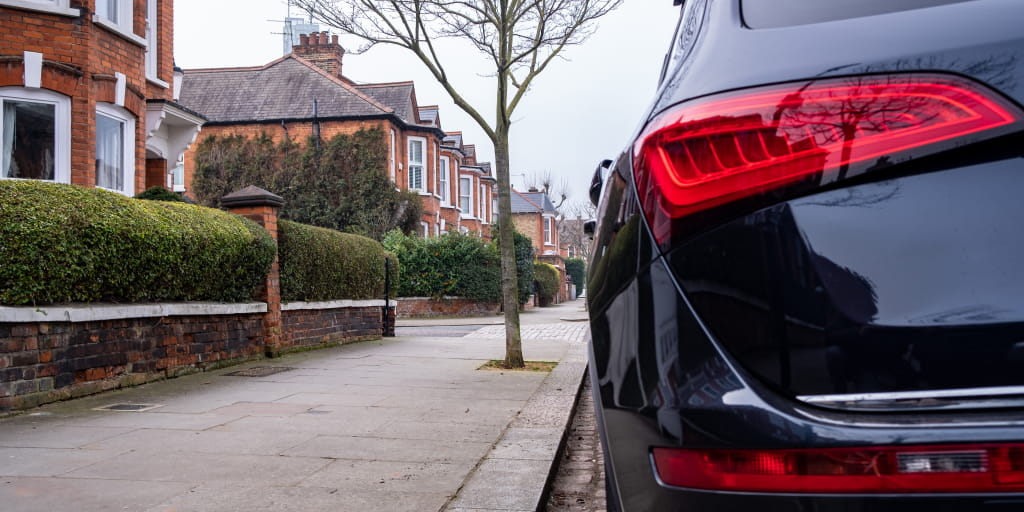
If the property does not have a drive or allocated parking spaces, you’ll need to ask whether parking permits are required and how much one costs. Also, find out about where visitors can park.
Ask about the next-door neighbours. For instance, is it a young couple, family or elderly couple? Do they have pets or a baby? This can help you gauge whether the house will be compatible with your lifestyle.
With more people working from home and streaming TV, internet speeds are probably one of the most significant considerations.
Ask who the internet service provider (ISP) is for the property. Visit the ISP’s website and enter the property’s postcode to determine available speeds.
Changing ISP requires some installation, such as cables or a satellite dish, so you will need approval from your landlord if you want to do this – check before you sign.
During the viewing, check your mobile phone signal too.
Another essential question to ask when renting is what type of boiler the property has. Combi boilers are excellent because they give you an unlimited hot water supply. A standard boiler is fine too, but you must set it up to heat the water daily. Find out whether there is an immersion heater as a backup.
Does the landlord have a service agreement plan for the boiler? It is good to have the reassurance that any problems with the boiler will be fixed quickly.
During the viewing, ask to check the shower pressure. This will avoid moving into a new home only to find that the shower pressure is terrible.
Check that the shower has a thermostatic mixer. This protects you from any sudden changes in the water supply to the shower, so even if somebody flushes the toilet or turns on the kitchen tap, the temperature of your shower will remain the same.
We have a comprehensive selection of properties in the Wimbledon area available to rent and can help you discover the right property for you. Register as a tenant today.
Let us know what you are looking for in your new home and we will tailor our search to your requirements.
Book a quick phone consultation with one of our negotiators.

"*" indicates required fields